Monday, June 9, 2014

Pledge to Prepare; and Why!


Reliant Survival Gear

Yesterday, I spoke with a gentleman in New York who tried to educate me on preparedness. He mentioned so many different concerns, many of which were legitimate and some were just out there. With so much going on in our Nation and throughout the world at large, it’s tough to ignore so much writing on the wall.
Now, let’s take that conversation into context: What if nothing happens? That’s exactly the question I’ll ask you. You, the prepared individual.
You, the prepper who purchases food to have in the event your employment situation loses its revenue temporarily, or a minor movement of the earth closes local markets and grocers. You, the healthy student of nutrition. You, the responsible parent who works to provide the necessities of life for your children and grandchildren and works to secure those ongoing needs. You, the involved citizen who talks with your neighbors and cares about the safety of your neighborhood. You, the owner of a vehicle who pays auto insurance for security against an undesired vehicular event. You, the purchaser of health insurance for a family whose health is fundamental and essential. You, the ardent securer of water storage, just in case another 5-day boil-water-alert happens this month. You, the consumer who also produces constructively while others are socially-secure thanks to your payroll contributions. You, whose money is lent to banks whose bail-outs secured enormous pensions. You, whose income tax returns without interest.
What if not one thing happens this year to drastically- or even minimally- inconvenience your lifestyle?
In the event that your storage of food, water, medical, and other resources remains unmoved out of necessity, then count yourself fortunate. This is what we hope for, although we’d be willfully ignorant to discredit the vulnerabilities of our current environments, local and global!
If your application of primitive or pioneer skills finds use within recreational or standard homestead practices instead of emergent necessity, then continue enjoying their practice in peace. Please carry on and experience the following in your endeavors to be self-reliant:

  • the joy of cultivating your plants and harvesting the literal fruits (& vegetables) of your labor
  • the satisfaction of knowing basic skills to make many of the leisurely staples such as flour, pasta noodles, sausage, buttermilk, cheese, bread, and so much more
  • the stewardship of slaughter & butchery
  • the responsible care and maintenance of firearms and useful weapons/tools
  • the autonomy of filtering and purifying water for all-things-related to its supply and use
  • the comfort of attending to basic medical issues, affording you the avoidance of over-crowded emergency waiting rooms, and unnecessary exposure to other contagious pathogens
  • the peace of mind that your food is not unnaturally grown and crammed into compact living conditions
  • the security that comes with protection against a failing economy and currency, through precious metals
  • the integrity of enjoying life’s experience as a perpetual learner, an ever-studious pupil
  • the unmatched fulfillment which attends precious family moments of teaching, learning, and sharing
  • the limitless advantages of perpetual personal progress
Natural disasters are going to happen as part of life. Adverse events are somewhat out of our control, so we prepare for those things which we can control: having something rather than having nothing. Knowing-by-doing rather than not knowing and doing nothing.
And if nothing happens, we have the satisfaction of having prepared for when it does.

Every year people are affected by disasters. Lives are lost, property is destroyed and personal effects lost to the unforgiving aftermath of both natural and man-made disasters. The saddest part of such devastation is that most of it could have been averted with the proper preparation. Being prepared does not mean that one won't incur any loss, however, if one prepares properly, it can save lives, homes and personal affects. Proper preparation can also make recovery and dealing with insurance companies and government entities exponentially easier.

http://reliantsurvivalgear.com
https://plus.google.com/b/102804328098454647730/+Reliantsurvivalgear007
https://www.facebook.com/reliantsurvivalgear

Monday, June 2, 2014

Evacuating Yourself and Your Family

Prepare now in the event of an evacuation.
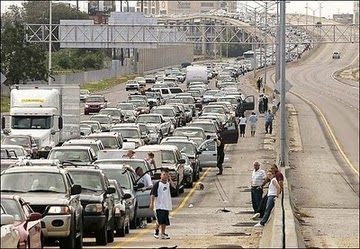
Evacuations are more common than many people realize. Fires and floods cause evacuations most frequently across the U.S. and almost every year, people along coastlines evacuate as hurricanes approach. In addition, hundreds of times a year, transportation and industrial accidents release harmful substances, forcing many people to leave their homes.
In some circumstances, local officials decide that the hazards are serious and require mandatory evacuations. In others, evacuations are advised or households decide to evacuate to avoid situations they believe are potentially dangerous. When community evacuations become necessary local officials provide information to the public through the media. In some circumstances, other warning methods, such as sirens, text alerts, emails or telephone calls are used.
The amount of time you have to leave will depend on the hazard. If the event is a weather condition, such as a hurricane, you might have a day or two to get ready. However, many disasters allow no time for people to gather even the most basic necessities, which is why planning ahead is essential.
Plan how you will assemble your family and supplies and anticipate where you will go for different situations. Choose several destinations in different directions so you have options in an emergency and know the evacuation routes to get to those destinations.
There may be conditions under which you will decide to get away or there may be situations when you are ordered to leave. Follow these guidelines for evacuation:
  • Plan places where your family will meet, both within and outside of your immediate neighborhood. Use the Family Emergency Plan to decide these locations before a disaster.
  • If you have a car, keep a full tank of gas in it if an evacuation seems likely. Keep a half tank of gas in it at all times in case of an unexpected need to evacuate. Gas stations may be closed during emergencies and unable to pump gas during power outages. Plan to take one car per family to reduce congestion and delay.
  • Become familiar with alternate routes and other means of transportation out of your area. Choose several destinations in different directions so you have options in an emergency.
  • Leave early enough to avoid being trapped by severe weather.
  • Follow recommended evacuation routes. Do not take shortcuts; they may be blocked.
  • Be alert for road hazards such as washed-out roads or bridges and downed power lines. Do not drive into flooded areas.
  • If you do not have a car, plan how you will leave if you have to. Make arrangements with family, friends or your local government.
  • Take your emergency supply kit unless you have reason to believe it has been contaminated.
  • Listen to a battery-powered radio and follow local evacuation instructions.
  • Take your pets with you, but understand that only service animals may be permitted in public shelters. Plan how you will care for your pets in an emergency.
If time allows:
  • Call or email the out-of-state contact in your family communications plan. Tell them where you are going.
  • Secure your home by closing and locking doors and windows.
  • Unplug electrical equipment such as radios, televisions and small appliances. Leave freezers and refrigerators plugged in unless there is a risk of flooding. If there is damage to your home and you are instructed to do so, shut off water, gas and electricity before leaving.
  • Leave a note telling others when you left and where you are going.
  • Wear sturdy shoes and clothing that provides some protection such as long pants, long-sleeved shirts and a cap.
  • Check with neighbors who may need a ride.

Tuesday, May 27, 2014

How much food should I store for an emergency?


http://reliantsurvivalgear.com/

This is a question my friends and customers of Reliant Survival Gear ask all the time and in light of the disasters of 2013, I’ve changed how I answer. First, you will want to carefully determine your calorie needs as you make your emergency plan. The next step is to consider what kind of emergencies are most likely to happen in your area and what other kind of emergencies you want to prepare for. Current Red Cross guidelines advise people to store at least three days of non-perishable food and water, and this is been their longtime standard. FEMA guidelines are one week bare minimum to one month or more.

Short Emergencies: Minimum Recommendations
In the last couple of years there have been many instances of unexpected, prolonged power outages and water supply contamination, that I encourage people to store at least seven days of food and water for each family member and pet (please don’t forget to plan for your pets; many of our customers who have survived outages and disasters say they now keep a month supply of canned or dry food and necessary medications in reserve).
Though it’s hard for most of us to believe in the modern era, severe weather can cause outages of a week or more, and it’s happened quite frequently in the very recent past. Whichever brands and types of food you store should be shelf-stable, packaged in waterproof containers, nutritious and shouldn’t require cooking. That’s a pretty short list of food, and you’re going to get sick of peanut butter and canned tuna really fast if you don’t investigate other options. Our Wise Company ready-to-eat freeze-dried meals offer variety, a long shelf life, and can even be prepared with cold water.

Will you be a Good Samaritan?
Most people are inclined to help their neighbors. People will share whatever they have to help others come through an emergency. If you’ll be checking on neighbors, especially elderly neighbors or others who may be more at risk, we recommend storing enough food for at least one “extra” family member. The same goes for pets. So many of my friends report sharing their pet’s food with displaced animals or their neighbors’ pets in an emergency that I recommend keeping a little extra on hand. Many people feel a moral obligation to help others, but there is good psychology behind it. In disaster most of us want to do something. It gives us a sense of control and boosts our optimism. Sharing food is an easy way to contribute.

Long-term Emergencies and Life Changes
Hurricanes Katrina and Sandy drove home the fact that some disasters are so massive it can take more than a week for emergency responders to reach hard-hit areas, and it can take months for even basic supply chains to recover. If you are in an urban area or a high-risk geographic zone, we recommend you store one to three months of food and invest in a high quality water purifier. Of course, individuals and families who store six months or more of food safety have a significantly higher peace of mind that they will be able to endure any emergency.
The last scenario to consider is how would you and your family survive if our society was disrupted by a war or a pandemic? There are a lot of interesting TV shows based on these futuristic scenarios, but you don’t have to look far back in history to see that it’s actually happened more than once. In his book The Great Influenza, John Barry details how history’s most lethal influenza virus swept the globe killing 100 million people in less than six weeks. The book outlines a chain of events that we would likely see repeated, even with advanced modern medicine and technology. When a virus is able to mutate and spread so quickly, emergency response networks are quickly overwhelmed, hospitals are filled, and society as we know it can change overnight.
I am not an alarmists, but I am a realist. If you’re concerned about these kinds of scenarios, It is recommended you store a years worth of food for each member of your family. Our dehydrated meals have up to a 25-year shelf life, so you don’t have to worry about rotating food or your investment spoiling. And, a year’s worth of food is an important safety net as you establish a self-sustaining food production cycle.

I have some excellent videos on my site that show you how Wise Company food products are made, packaged and show the actual food and preparation. They are at the top of each "Wise Company Food Storage" page. I recommend watching these videos first, this will help you decide which Wise products will be best for you and your family. And after that, you can start down the path of food prepping you and your family for either short term or long term disasters. Another thing to remember is that preparing for disasters is not something that you just buy some things and your done. It is strongly recommended to buy some basic necessities first, and then little by little add to your plan. Make it a small part of your monthly budget and do this year round. Get the kids involved, it will teach them the importance of planning ahead, and I have found that they really enjoy this activity as well.
"It's Responsible to be Prepared!"
http://reliantsurvivalgear.com
https://plus.google.com/b/102804328098454647730/+Reliantsurvivalgear007
https://www.facebook.com/reliantsurvivalgear


Monday, May 19, 2014

Storing Water for Survival Situations


Get your WaterBrick's Here

How Much Water Do I Need?

Minimum: 1 Gallon of Water per Person per  Day
A normally active person needs at least one gallon of water daily just for drinking.  However, individual needs vary depending on age, physical condition, activity, diet and climate.

For a typical family of four, a two week supply of water
would require 56 gallons of water minimum.

According to FamilySurvivalPlanning.com, "In addition to drinking water, you will need 1/2 gallon per person per day for other uses, such as brushing teeth, washing dishes, etc. So 1 gallon per person per day is the bare minimum. On a regular day, you may wash several gallons of water down the drain as you rinse the dinner dishes. In an emergency situation, you will have to keep a watchful eye on the amount used for those purposes. A wet cloth wipe-up may be all your dishes get.
 
One gallon per person per day is a good general starting amount, but you may need more than that. Take into consideration the specific needs of your family.
  • If the majority of your storage foods are dry or dehydrated, you'll need more water for preparation of those foods.
  • Do you have pets? If so, you'll need to plan additional water for them.
  • Do you have a baby in your house? How much water do you need for preparing formula or baby food? Since babies sometimes spit up and make messes, you'll need sufficient water to clean up.
  • Active teenagers usually drink more liquids than adults. Make sure to store plenty of water for active teens.
  • Is any member of your family an invalid or chronically ill? Do they have an increased need for water to take medications or for personal care?
  • Do you live in an area where extreme heat is a regular occurrence? Everyone will need more water if that is your situation.
  • Are you accustomed to drinking more water for good health? If so, cutting back drastically, especially in a time of crisis, could be very difficult physically."


How Should I Store Water?

It is recommended you purchase food grade water storage containers from Reliant Survival Gear to use for water storage.

Preparing Containers:

Before filling with water, thoroughly clean the containers with dishwashing soap and water and rinse completely so there is no residual soap.  Sanitize the containers by adding a solution of 1 teaspoon of non-scented liquid household chlorine bleach to a quart of water. Mix the sanitizing solution in the container so that it touches all surfaces. After sanitizing the bottle, thoroughly rinse out the sanitizing solution with clean water.

Filling Water Containers:

  • Fill the bottle to the top with regular tap water. (If your water utility company treats your tap water with chlorine, you do not need to add anything else to the water to keep it  clean.)

If the water you are using comes from a well or water source
that is not treated with chlorine, add two drops of non-scented
liquid household chlorine bleach to each gallon of water.
  • Tightly close the container using the original cap. Be careful not to contaminate the cap by touching the inside of it with your fingers. Write the date on the outside of the container so that you know when you filled it. Store in a cool, dark place.
  • Replace the water every six months if not using commercially bottled water or a water preserver.

What are some Water Sources?

Unsafe Sources:

  • Radiators or hot water boilers (home heating systems)
  • Water from the toilet bowl or flush tank
  • Water beds - Fungicides added to the water or chemicals in the vinyl may make the water unsafe to use.
  • Swimming pools and spas - Chemicals used to kill germs are too concentrated for safe drinking but can be used for personal hygiene, cleaning and other related uses.


Emergency Outdoor Water Sources:


If you need to find water outside your home, you can use these sources.  Containers like WaterBrick allow you to easily and more efficiently collect water from these outdoor sources.  Be sure to treat the outdoor water before drinking it.
  • Rainwater
  • Streams, rivers, and other moving bodies of water
  • Ponds and lakes
  • Natural springs

Avoid water with floating material, an odor, or dark color.
Use saltwater only if you distill it first.
You should never drink flood water.


How Do I Treat the Water? 

If you have used all of your stored water and there are no other reliable clean water sources, it may become necessary in an emergency situation to treat suspicious water. Treat all water of uncertain quality before using it for drinking, food washing or preparation, washing dishes, brushing teeth or making ice.

In addition to having a bad odor and taste, contaminated water can contain microorganisms (germs)that cause diseases such as dysentery, 
cholera, typhoid and hepatitis.
There are many ways to treat water. None is perfect. Often the best solution is a combination of methods. Make sure you have the necessary materials in your disaster supplies kit for the chosen water treatment method.

Before treating, let any suspended particles settle to the bottom or strain them through coffee filters or layers of clean cloth.

Water Filters:
There are many water filters that can be used in combination with water containers like WaterBrick.

Water Treatment Preservers:

Water Preserver - Treats 50-55 gallons of water. EPA approved.  The water will remain crisp and fresh for up to 5 years. No need to rotate the stored water every 6 months if a water treatment preserver is added.

Water Purification Tablets:


Water purification tablets. They are effervescent tablets which kill micro-organisms in water to prevent cholera, typhoid, dysentery and other water borne diseases. Treat the water when you use it! No need to rotate stored water.


For other information on water treatment methods, go to page 11 of  FEMA's Food and Water in an Emergency Brochure here.
http://reliantsurvivalgear.com/shop/water-brick
Click on Logo

Tuesday, May 13, 2014

Do you think the Government will take care of you in the event of a major disaster?

If a major emergency happened in the United States, do you have faith that the government would take care of you? Amazingly, even after all of the examples to the contrary that we have seen in recent years, a solid majority of all Americans actually believe that the government will be there for them when things hit the fan. According to a new survey conducted by the Adelphi University Center for Health Innovation, 55% of Americans believe that the authorities will come to their rescue when disaster strikes. Sadly, most Americans still view the government as a “nanny state” that has both the capability and the willingness to take care of them from the cradle to the grave. Most Americans still have faith that the government will come through for them when they need it the most. But all we have to do is look back at what happened during the aftermath of Hurricane Katrina to realize what a crock of baloney that is. Hurricane Katrina was a disaster that was limited to a relatively small geographic area, and yet we all saw how the response of the federal government was a complete and utter failure. So what is going to happen someday if there is a nationwide disaster that stretches on for months or even years? Do you really believe that the federal government will be there for you?
How is the federal government going to take care of more than 300 million Americans in the event of a major financial collapse?
How is the federal government going to rescue more than 300 million Americans if a killer pandemic sweeps the nation?
How is the federal government going to make sure that more than 300 million Americans are safe and secure if a cyber attack cripples our power grid or takes down the entire Internet?
How is the federal government going to get food and water to more than 300 million Americans if an EMP blast takes down most of the electronics in this country?
It would be easy to go on and on discussing various nationwide emergency scenarios. All over the globe the number of earthquakes is increasing, and it would be easy to imagine an absolutely massive earthquake on the west coast or along the New Madrid fault in the middle of the country leaving tens of millions of Americans in need of basic assistance.
What would the federal government do in a situation like that?
Or how would the government handle a full-blown eruption of a major volcano in the Pacific northwest?
If the federal government could not even come close to handling Hurricane Katrina, then how in the world are they going to rescue us from something far worse?
Sadly, most Americans just roll along as if everything is going to be just fine.
-44 percent of all Americans do not have first-aid kits in their homes.
-48 percent of all Americans do not have any emergency supplies stored up.
-53 percent of all Americans do not have a 3 day supply of nonperishable food and water in their homes.
Essentially, what we have got is about half the country that is completely and totally unprepared.
About half the nation is sitting back and relying on the government to make all of the preparations.
Yes, the government is definitely preparing, but those preparations are only going to go so far.
On July 19th, 2012 FEMA posted a solicitation document for packaged meals. According to that document, the maximum amount of meals that would be provided to FEMA under the contract would be 17.5 million meals.  The following is from the FEMA solicitation document….
As referred to in paragraph (b) of FAR Clause 52.216-22, “Indefinite Quantity” of this contract, the guaranteed contract minimum is 21,000 packaged meals to include the base and option periods.  The contract ceiling amount shall not exceed 17,500,000 packaged meals.
But even if FEMA ordered all 17.5 million meals, that simply is not going to go very far. That would only be enough to provide about 5 percent of the population with a single meal.
So perhaps we should applaud FEMA for thinking ahead, but the truth is that there is simply no way that FEMA is going to be able to provide even the basic necessities for everyone if there is a very large regional or national disaster.
When a true disaster hits this country, the system is going to be concerned with saving and guarding and perpetuating itself. The system is not really going to care about the survival of all of the “useless eaters” out there.

Barack Obama signed a series of executive orders that grant him extraordinary powers in the event of a national emergency.
With the stroke of a pen, Barack Obama could potentially take control of all food, all energy, all health resources, all transportation resources and all communication resources (including television, radio and the Internet).
Barack Obama insists that all of these executive orders are absolutely necessary.
Does he know something that we don’t?
In an editorial by Barack Obama that ran in the Wall Street Journal, Obama warned us of some of the potential consequences of a devastating cyber attack….
It doesn’t take much to imagine the consequences of a successful cyber attack. In a future conflict, an adversary unable to match our military supremacy on the battlefield might seek to exploit our computer vulnerabilities here at home. Taking down vital banking systems could trigger a financial crisis. The lack of clean water or functioning hospitals could spark a public health emergency. And as we’ve seen in past blackouts, the loss of electricity can bring businesses, cities and entire regions to a standstill.
The truth is that in the event of a major nationwide emergency the number one priority of the authorities will not be to take care of you.
In fact, the well being of you and your family will be very low on the list.
One of the top priorities will be to restore order, and authorities will use as much violence and brutality as it takes in order to do that.
The economy continues to get worse in many ways, and the U.S. poverty rate is currently on pace to reach its highest level since the 1960s.
The Federal Reserve and the federal government did not prevent the last major global financial crisis, and they are not going to be able to prevent the next one from happening either.
If you want to make it through what is coming, it is up to you to get prepared.  Nobody else is going to do it for you.
When the next major natural disaster or economic crisis happens, it will be those that have prepared that will have hope. Those that have not prepared will be freaking out and many of them will totally give in to despair or fear. But those that have gotten ready for the storm ahead of time will be able to be at peace.
Our world is becoming more unstable with each passing day. If you have blind faith that the government will always take care of you, then there is a very good chance that someday you will be bitterly disappointed. But if you work really hard to prepare yourself and your family now, then you will have a much better chance of making it through what is rapidly approaching.
http://reliantsurvivalgear.com
https://plus.google.com/b/102804328098454647730/+Reliantsurvivalgear007
https://www.facebook.com/reliantsurvivalgear

Hurricanes: Terror of the Coasts

Atlantic Hurricane Season is June 1-November 30
Named for Huracan, the Carib god of evil, the hurricane is an amazing yet destructive natural phenomenon that occurs about 40 to 50 times worldwide each year. Hurricane season takes place in the Atlantic, Caribbean, Gulf of Mexico, and Central Pacific from June 1 to November 30 while in the Eastern Pacific the season is from May 15 to November 30.
Hurricane Formation
Due to the Coriolis effect, the regions between 5° and 20° north and south of the equator are the belts where hurricanes can form (there is not enough rotary motion between 5° north and south. The term cyclone is used in the Bay of Bengal and Arabian Sea and the term typhoon is used in the Pacific Ocean north of the equator and west of the International Dateline.
The birth of a hurricane starts as a low pressure zone and builds into a tropical wave of low pressure. In addition to a disturbance in the tropical ocean water, the storms that become hurricanes also require warm ocean waters (above 80°F or 27°C down to 150 feet or 50 meters below sea level) and light upper level winds.
Growth and Development of Tropical Storms and Hurricanes
A tropical wave grows in intensity and then may grow to become an organized area of showers and thunderstorms known as a tropical disturbance. This disturbance becomes an organized area of tropical low pressure that is called a tropical depression based on cyclonic winds (counter-clockwise in the Northern Hemisphere and clockwise in the Southern Hemisphere). A tropical depression's wind speed must be at or below 38 miles per hour (mph) or 62 km/hr when averaged out over one minute. These winds are measured at 33 feet (10 meters) above the surface.
Once average winds reach 39 mph or 63 km/hr then the cyclonic system becomes a tropical storm and receives a name while tropical depressions are numbered (i.e. Tropical Depression 4 became Tropical Storm Chantal in the 2001 season.) Tropical storm names are preselected and issued alphabetically for each storm.
There are approximately 80-100 tropical storms annually and about half of these storms become full-fledged hurricanes. It is at 74 mph or 119 km/hr that a tropical storm becomes a hurricane. Hurricanes can be from 60 to almost 1000 miles wide. They vary widely in intensity; their strength is measured on the Saffir-Simpson scale from a weak category 1 storm to a catastrophic category 5 storm. There were only two category 5 hurricanes with winds over 156 mph and a pressure of less than 920 mb (the world's lowest pressures ever recorded were caused by hurricanes) that struck the United States in the 20th century. The two were a 1935 hurricane that struck the Florida Keys and Hurricane Camille in 1969. Only 14 category 4 storms hit the U.S. and these included the nation's deadliest hurricane - the 1900 Galveston, Texas hurricane and Hurricane Andrew which hit Florida and Louisiana in 1992.
Hurricane damage results from three primary causes:
1) Storm Surge. Approximately 90% of all hurricane deaths can be attributed to the storm surge, the dome of water created by the low pressure center of a hurricane. This storm surge quickly floods low-lying coastal areas with anywhere from 3 feet (one meter) for a category one storm to over 19 feet (6 meters) of storm surge for a category five storm. Hundreds of thousands of deaths in countries such as Bangladesh have been caused by the storm surge of cyclones.
2) Wind Damage. The strong, at least 74 mph or 119 km/hr, winds of a hurricane can cause widespread destruction far inland of coastal areas, destroying homes, buildings, and infrastructure.
3) Freshwater Flooding. Hurricanes are huge tropical storms and dump many inches of rain over a widespread area in a short period of time. This water can engorge rivers and streams, causing hurricane-induced flooding.
Unfortunately, polls find that about half of Americans living in coastal areas are unprepared for a hurricane disaster. Anyone living along the Atlantic Coast, the Gulf Coast and the Caribbean should be prepared for hurricanes during hurricane season.
Fortunately, hurricanes ultimately diminish, reverting to tropical storm strength and then into a tropical depression when they move over cooler ocean water, move over land, or reach a position where the upper level winds are too strong and are thus unfavorable.

https://www.facebook.com/reliantsurvivalgear
https://plus.google.com/b/102804328098454647730/+Reliantsurvivalgear007/posts
http://reliantsurvivalgear.com/

The Documents You'll Need in an Emergency

Having documentation during an emergency can be very helpful and sometimes essential! There are certain identification, insurance and personal documents that you’ll wish you had during an emergency. Here are a few things to consider while collecting your important papers:
How to store
It’s pretty easy to digitize your records to fit them all onto a hard drive or flash drive. If you choose not to go this route, you can always keep copies of these documents in a water-proof folder. You might consider creating a master list (or Excel spreadsheet) to track all of your documents. There is a great tutorial by Lifehacker on how to do this.
However you store your documents, you’ll want to make sure that they are housed in a weather-resistant container of some sort.
Where to store
During an emergency, you’ll want to know where this information is. We recommend that you put this information in your 72-hour kit. By placing this information on one of the exterior pockets, it will be easy to access if you need to get to it quickly.
You can also make copies to be placed in your emergency supplies at home.
Types of documents
Identification papers
Copies of documents like your passport, driver’s license, social security card, birth certificates, and others are important to include in your emergency kit.
Insurance papers
If a natural disaster struck, how would you get in contact with your insurance company? It’s a good idea to have contact information for your insurance company and bank. You should include account numbers.
Be sure to include photos, descriptions and other documentation about the items in your home. Some families have even taken video tours of their home to show proof of them owning certain items in their home.
You could also include copies of house or property ownership if that becomes disputed.
Personal documents
While preparation might not protect certain family heirlooms, you can also take precautions against loosing certain family valuables like marriage certificates, treasured photos, family history records or old family keepsakes.
Some families have completely digitized their records to fit on a single flash drive or hard drive.
Medical documents
Making copies of vital medical records is a great thing to include in emergency plans. These could include allergies, prescriptions that you are on, immunizations, medical conditions, etc.
Contact information
You should have the names and phone numbers of a few vital contacts – a family relative that lives out of state, your insurance contact, etc. You can also include information on who people should contact if you or your pack is found.
List
Here is a list of some of the documents that you should consider:
Insurance
  • Household and place of business inventory (recorded using photographs, videotape, or stored on a database manager computer program).
  • Duplicates of insurance policies (life, health, auto, home, hazard, etc.)
  • Mortgage documents
  • Real estate deeds
  • Title papers
  • Motor vehicle titles and bill of sale,
  • serial or VIN numbers
  • Wills and trusts
  • Safe deposit box: location, number, inventory of contents, location of key, authorized persons to access box
  • Investment portfolio
  • Stocks, bonds and other securities
  • Bank, checking, savings account numbers or certificates
  • Credit card accounts (company and account numbers
Medical
  • Family health and medical records
  • Employee benefitsinformation
  • Letter of instruction in case of death
  • Funeral and burial plans
  • Name, address, phone number of attorney, financial advisor and insurance agents
  • Photocopy of documents carried in wallet or purse
Identification
  • Birth, marriage, and death certificates
  • Adoption and custody decrees
  • Citizenship papers
  • Military papers
  • Passports, visas
  • Social security card (or card numbers)
  • Employment records
Personal
  • Family photos, videotapes, etc.
  • Important books
  • Personal family history
  • Family genealogy records 
 https://www.facebook.com/reliantsurvivalgear
 https://plus.google.com/b/102804328098454647730/+Reliantsurvivalgear007/posts
 http://reliantsurvivalgear.com/